
Request A Property Evaluation Today
Install Underground Utilities With Trenching Services In St Albans, WV
Many property improvements happen below the surface before they are ever visible above ground. Water lines, electrical service, drainage systems, communication lines, and other underground infrastructure all require carefully planned pathways before installation can begin. Trenching creates the access needed for these systems while helping prepare properties for construction, development, and future improvements.
At Dirt Shifters, we provide trenching services for homeowners, rural property owners, and small commercial clients throughout St Albans, WV, and surrounding communities. Whether you’re installing utilities for a new structure, extending services across your property, improving drainage, or preparing for future development, trenching helps create the underground pathways necessary to support the project.
Every trenching project is different. Some involve short utility runs to detached garages or workshops. Others require longer trenching routes across larger rural properties where utilities must travel significant distances. Understanding the property’s layout, future plans, and installation requirements helps determine the most practical approach.
If you’re planning a utility installation or underground infrastructure project, call (304) 407-2850 to discuss trenching services for your property.
Why Trenching Is Important For Utility And Infrastructure Projects
Most property owners focus on the finished result when planning improvements. They think about the new building, upgraded utility service, improved drainage system, or future expansion. However, many of these projects depend on underground infrastructure that must be installed before the visible work can begin.
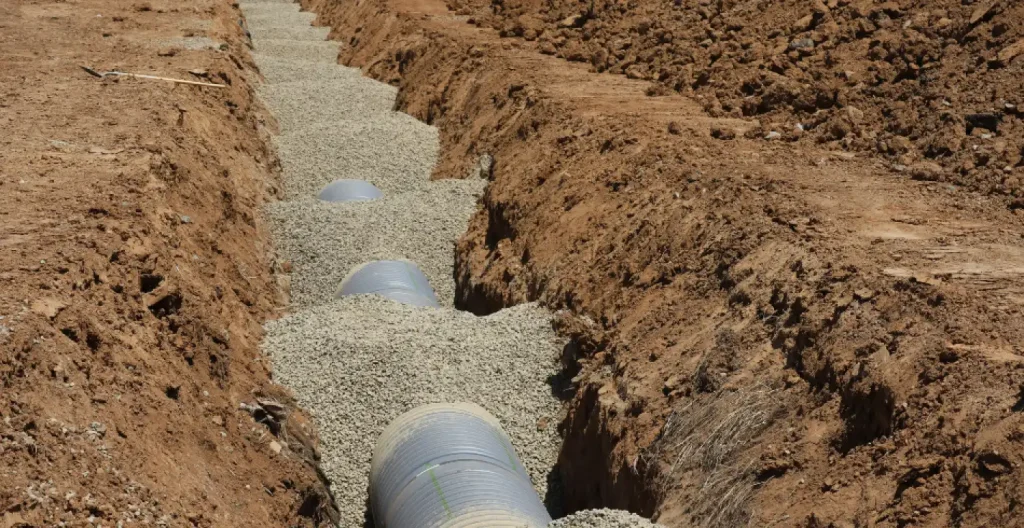
Trenching provides access for utility installation while helping protect infrastructure from damage and environmental exposure. Water lines, electrical conduits, communication cables, drainage pipes, and other systems often require underground placement to support safe and efficient operation.
One of the most common reasons trenching is needed is new construction. Homes, garages, workshops, barns, and other structures require utility connections before they can become fully functional. Trenching creates the pathways necessary for those services to reach the building site.
Drainage improvements are another frequent reason for trenching. French drains, drainage pipes, runoff management systems, and other water control solutions often rely on underground installations that help move water away from problem areas. Without proper trenching, these systems cannot be installed effectively.
Property expansion projects frequently involve trenching as well. Rural property owners may need to extend utilities to new structures located far from existing service connections. Creating underground routes allows those improvements to move forward while helping preserve the appearance and usability of the property.
Trenching can also support future planning. Property owners who anticipate additional improvements may choose to install utility pathways during current projects rather than revisiting the site later. This can help simplify future development while reducing disruption.
Because underground infrastructure is often hidden once installation is complete, it can be easy to overlook its importance. However, many of the conveniences property owners rely on every day depend on properly installed systems beneath the surface.
Whether supporting construction, utilities, drainage improvements, or future development, trenching helps establish the infrastructure needed to make those projects possible.
Trenching Solutions For West Virginia Properties
Properties throughout St. Albans and the surrounding areas often present conditions that influence how trenching projects are planned and completed. Elevation changes, wooded areas, rocky terrain, drainage patterns, and rural property layouts can all affect utility routing and installation requirements.
Many trenching projects begin after land clearing or excavation work has been completed. Creating access to the installation area allows utilities and infrastructure systems to be planned more effectively while providing better visibility into site conditions.
Rural properties frequently require longer trench runs than properties located within more densely developed areas. Utility services may need to travel significant distances from existing connection points to reach new homes, garages, workshops, barns, or agricultural structures. Careful planning helps determine the most practical route while supporting future property use.
Drainage projects also rely heavily on trenching. French drains, runoff control systems, and underground drainage solutions often require trench installation before pipes and other components can be placed. These systems help manage water movement while supporting broader property improvement goals.
Many trenching projects work alongside other services offered by Dirt Shifters. Excavation may be needed before utility installation begins. Grading can help improve drainage after trenching is completed. Building pad preparation often occurs near utility installation routes. Coordinating these services helps ensure that each phase supports the next.
West Virginia’s terrain can also influence how water interacts with underground infrastructure. Properties with slopes and changing elevations often require careful planning to ensure utility and drainage systems function properly once installed.
While trenching may not be the most visible phase of a project, it is often one of the most important. The success of utility installations, drainage systems, and many construction projects depends on creating the proper pathways before future improvements begin.
If you’re preparing for utility installation, drainage improvements, or future construction, call (304) 407-2850 to discuss trenching services for your property.
Frequently Asked Questions About Trenching Services
What types of projects require trenching?
Trenching is commonly used for utility installation, water lines, electrical service, communication lines, drainage systems, and infrastructure improvements.
Can trenching be used for drainage projects?
Yes. French drains, drainage pipes, runoff management systems, and other water control solutions often require trenching before installation can begin.
Is trenching necessary for new construction?
Many new construction projects require trenching to install utility connections that support the future structure.
Can utilities be extended to detached buildings?
Yes. Trenching is commonly used to extend water, electrical, and communication services to garages, workshops, barns, and other detached structures.
What services commonly accompany trenching projects?
Trenching often works alongside excavation, grading, drainage improvements, building pad preparation, land clearing, and construction site preparation.
Do you provide trenching for residential and small commercial properties?
Yes. We dig utility pathways for residential additions, extend services across large rural properties, and install infrastructure routes for small businesses.
Prepare Utility Pathways Before Installation Begins
Create space for utilities, drainage systems, and underground infrastructure.
